Tuesday, November 8, 2022

Outbreaks of Nontuberculous Mycobacteria Infections Highlight Importance of Maintaining and Monitoring Dental Waterlines


 Here is the latest on Dental Unit Waterlines from the CDC...


Summary

The Centers for Disease Control and Prevention (CDC) is issuing this Health Alert Network (HAN) Health Advisory to emphasize the importance of following existing recommendations for maintaining and monitoring dental waterlines. Multiple outbreaks of nontuberculous Mycobacteria (NTM) infections have occurred in children who received pulpotomies in pediatric dental clinics where the dental treatment water contained high levels of bacteria. CDC provides guidelines on infection control in dental settings which contain recommendations to treat dental unit waterlines and monitor water quality. Dental providers should be familiar with these recommendations on how to properly maintain and monitor their dental equipment to ensure that dental treatment water is safe for patient care.

Background

While rare, there have been multiple documented cases of disease transmission from dental unit waterlines (narrow-bore plastic tubing that carry water to the high-speed handpiece, air/water syringe, and ultrasonic scaler).1-5 Dental units have unique characteristics that make them prone to biofilm formation.6 Biofilms occur in dental unit waterlines due to the long, small-diameter tubing and low flow rates used in dentistry and the frequent periods of stagnation. As a result, high numbers of common waterborne bacteria can be found in untreated dental unit water systems. Disease-causing microorganisms found in untreated dental unit water can include Legionella, Pseudomonas aeruginosa, and nontuberculous Mycobacteria (NTM).

Dental providers and patients could be placed at risk of adverse health effects if dental unit water is not appropriately treated. In March 2022, CDC was notified of a new cluster of suspected NTM infections in children following dental procedures at a pediatric dental clinic. Investigation into this cluster is currently ongoing, and preliminary site visit data report that dental unit waterline testing results showed microbial counts much higher than the level recommended by CDC.

In 2016, an outbreak occurred at a pediatric dental clinic in Orange County, California, with 71 patients identified as having odontogenic NTM infections following pulpotomy procedures.1 Municipal water stored in a pressurized bladder holding tank was used to fill the dental unit water bottles. The clinic was not using disinfectants on their dental unit waterlines or regularly monitoring water quality. All water samples tested from the dental units showed microbial counts higher than the level recommended by CDC and multiple species of NTM were identified in syringe water samples from five of the six treatment rooms.

In 2015, 24 cases of odontogenic NTM infections were reported in children receiving pulpotomy treatment from a pediatric dental clinic in Georgia.2 Investigators from the Georgia Department of Public Health found that municipal water was used during dental procedures, the clinic was not using a disinfectant in their dental unit waterlines, and the clinic was not regularly monitoring the water quality as recommended by CDC. Microbial testing of the water samples taken from the dental units showed very high microbial counts of Mycobacterium abscessus. The M. abscessus isolates recovered from the water were found to be identical to eight isolates from tissue samples from seven of the patients, suggesting that water was the source of the infections.

The outbreaks in California and Georgia involved young children, with ages ranging from 4 to 8 years. Many of the children developed severe infections with clinical diagnoses such as cervical lymphadenitis and mandibular or maxillary osteomyelitis, and required hospitalization, treatments such as intravenous antibiotics, and surgical procedures. Complications from their infections included permanent tooth loss, hearing loss, facial nerve palsy, and incision fibrosis.

Because of the potential to form biofilm, CDC recommends that all dental unit waterlines be treated regularly with disinfectants to meet the Environmental Protection Agency (EPA) regulatory standards for drinking water (i.e., ≤500 colony forming units (CFU)/mL of heterotrophic water bacteria).7 There are many commercial products and devices available to disinfect and maintain dental unit waterlines. Dental unit water quality must also be monitored routinely as recommended by the equipment manufacturer to ensure that treatments are working effectively and that the water used in dental procedures meets safety standards.6 Dental providers should consult with the dental equipment manufacturer for appropriate methods and equipment to both maintain and monitor the quality of dental water.

Oral surgical procedures involve the incision, excision, or reflection of tissue that exposes the normally sterile areas of the oral cavity. Examples include biopsy, periodontal surgery, apical surgery, implant surgery, and surgical extractions of teeth (e.g., removal of erupted or nonerupted tooth requiring elevation of mucoperiosteal flap, removal of bone or section of tooth, and suturing if needed). During oral surgical procedures, dental practitioners should use only sterile solutions as a coolant or irrigant using an appropriate delivery device, such as a sterile bulb syringe, sterile tubing that bypasses dental unit waterlines, or sterile single-use devices.

For the full post with recommendations & resources, follow this link

Thursday, November 3, 2022

AAMOS Surgical Experts Publish Updated MRONJ Guidance

 On occasion, the best efforts of our medical system can actually solve one problem and unintentionally create another.  One of these situations is a troubling outcome from bisphosphonate therapy.  What follows is the most recent information from AAMOS...


AAOMS prioritizes prevention of the jaw disease, continuing cancer care


The American Association of Oral and Maxillofacial Surgeons (AAOMS) has issued updated guidance for treating a rare but potentially serious jawbone condition that can impact patients taking antiresorptive medications to treat certain cancer types.

Medication-related osteonecrosis of the jaw, or MRONJ, is often-painful and characterized by exposed dying bone in the upper and lower jaws, swelling of the gums and loosening of previously stable teeth.

To help patients and healthcare providers navigate this clinical concern, oral and maxillofacial surgery experts analyzed literature and revised guidance to reflect current best practices. The 2022 recommendations – published in the Journal of Oral and Maxillofacial Surgery – prioritize preventing the disease while continuing cancer treatment necessary to maintain quality of life and support bone health.

"Although no individual nor collection of strategies eliminates all MRONJ risk, certain preventive procedures can make a difference," said lead author Salvatore L. Ruggiero, DMD, MD, a practicing surgeon and professor at the Stony Brook School of Dental Medicine in New York. "Maximizing overall patient well-being is always the preference."

Among strategies for reducing the risk of MRONJ: maintaining good oral hygiene, performing high-risk surgical procedures prior to initiating drug therapies, quitting smoking and optimizing diabetes care.

Authors agree that prevention starts with realizing that patients receiving bone-preserving medications (antiresorptives) face altered wound-healing capacity, another potential risk factor for developing MRONJ. Healthcare providers must recognize the importance of coordinating dental care and treatment planning for osteoporosis and cancers involving these therapies, they wrote.

Doing so requires continuous efforts to educate patients, dentists and medical professionals about the real risks associated with antiresorptives and the clinical paradigm shift needed to mitigate MRONJ, researchers wrote.

AAOMS emphasizes the importance of a multidisciplinary approach to treating patients receiving such treatment. This also may apply to other substances used to stimulate the immune system or targeted therapies taken alone or in combination with antiresorptives (brand names such as Fosamax, Boniva and Prolia). Team-based MRONJ care includes consulting an appropriate dental professional when a doctor determines a patient could benefit from these medications.

"Oral and maxillofacial surgeons are versed in treating this clinical concern, and it is crucial that oncologists, rheumatologists and other providers work with our specialty to prevent and treat it," said Thomas B. Dodson, DMD, MPH, article co-author and editor-in-chief of the Journal of Oral and Maxillofacial Surgery, AAOMS's official journal. "Our goal in issuing this update is to educate both our peers in medicine and patients about the evolving knowledge base in addressing MRONJ."

It is important to understand that patients at risk for or with MRONJ also may present with other issues that appear similar, authors wrote. Commonly misdiagnosed conditions may include dry socket, sinusitis, gingivitis and periodontitis. Therefore, they said it is important for patients to undergo a detailed clinical and radiographic examination by an experienced oral healthcare practitioner to diagnose MRONJ.

There are several other local, potentially predisposing factors – including tooth extraction and operations on the thickened ridge of the bone that contains tooth sockets. Other concerns such as steroid and tobacco use may increase risk. The danger of developing MRONJ is higher in patients who have received antiresorptive medications for metastatic bone disease (less than 5 percent) compared to those receiving such drugs for osteoporosis (less than 0.05 percent).

Surgical management of MRONJ is increasingly considered a viable method of treatment for all stages of the disease, according to the 2022 guidance. These procedures involve the removal of necrotic jawbone until viable bone is encountered. AAOMS has developed a series of algorithms to assist doctors in streamlining and determining the correct care pathway for individual patients. A departure from the three previous position papers, the 2022 recommendations recognize the value of surgical intervention regardless of MRONJ disease stage.

AAOMS supports continued oncologic treatment for MRONJ patients whether they are receiving antiresorptive therapy alone or in combination with immune modulators or antiangiogenic medications. Authors wrote that quality of life is typically managed by preventing new areas of necrosis, controlling secondary infections, offering pain control and educating patients.

Additionally, the new guidance deemphasizes the role of medications other than antiresorptives in causing the condition. Studies suggest the cause is likely multifactorial, stemming both from drugs prescribed alongside inflammation or infection. A research review failed to prove if a drug holiday (ceasing use of medications for a defined period) is beneficial or harmful to patients, the authors wrote.

"Medication-Related Osteonecrosis of the Jaw – 2022 Update" was developed by three authors of the 2014 AAOMS position paper on MRONJ, along with three member of the Association's Committee on Oral, Head, and Neck Oncologic and Reconstructive Surgery. In addition to Drs. Ruggiero and Dodson, authors include Tara Aghaloo, DDS, MD, PhD, UCLA School of Dentistry; Eric R. Carlson, DMD, MD, EdM, University of Tennessee Graduate School of Medicine; Deepak Kademani, DMD, MD, North Memorial Health and the University of Minnesota; and Brent B. Ward, DDS, MD, University of Michigan Hospital.

At an MRONJ presentation during AAOMS's 104th Annual Meeting, Scientific Sessions and Exhibition in New Orleans in September, Carlson told attendees the update was needed to reflect numerous advancements in MRONJ knowledge over the past eight years.

"It became very clear to our national organization that there were many substantial and very interesting changes in terms of our understanding of this disease, particularly with regard to its treatment," he said.

Carlson said the updated definition of an MRONJ case includes three elements:

Current or previous treatment with antiresorptive therapy alone or in combination with immune modulators or antiangiogenic medications.

Exposed bone or bone that can be probed in the maxillofacial region that has persisted for more than eight weeks.

No history of radiation therapy to the jaws or obvious metastatic disease to the jaws.

"MRONJ is preventable, resectable and reconstructable in a very predictable fashion," said Carlson. "The new position paper will help medical and dental professionals in their treatment of patients who require these medications." 

Read the full position paper at AAOMS.org/MRONJ.

Wednesday, November 2, 2022

Apple Announces that iPhones are Switching to USB-C

  Apple has always been a bit of a "lone wolf" when it comes to hardware.  The company maintains tight control over their hardware and software empire.  In some ways this can be an incredibly good thing.  You don't often buy or hear of an Apple product that has hardware issues or compatibility issues with another piece of Apple hardware.

However, like the Yin and Yang, there are positives and negatives to everything.  Sometimes that means Apple forces its users into hardware formats they may not want to go.  As an example, I'll use my current MacBook Pro.  I purchased it shortly before Covid hit in 2019.  At the time, that model only offered 4 ports and there were *all* USB-C.  Even the power port was USB-C which forced me to use one of the 4 ports just to charge the device.  My previous model had several different ports including HDMI, USB, and even an SD card slot.  My new Mac forced me to buy all kinds of dongles and adapters so that I could connect to an Ethernet cable, HDMI , SD, USB 2.0, and even a second HDMI adapter as I usually am working from 3 screens.

Imagine my frustration when recently the company announced that their new MacBook Pro models would offer a variety of ports to meet consumer demand.  I was *less than thrilled*.

And that brings us to the point of today's post.  In an effort to make things easier for consumers, the European Union placed a mandate on manufacturers to use USB-C to charge their devices.  In the last, probably 7 years (although I'm not sure of the exact amount of time), Apple has used their proprietary "Lightning" connector to charge iPhones, iPads, and iPods.  

Personally I'm grateful to the EU for this little piece of legislation.  I'm tired of having to have a lighting cord with me whenever I want to charge my phone or tablet.  The mandate is set to take affect in autumn of 2024, but Apple is not hiding their angst over it.

For a full discussion, take a look at this page from The Verge...  

Tuesday, November 1, 2022

FDA Announces Shortages on Amoxicillin Suspensions

 A short post today as most of us are probably a bit tired after the big Halloween Celebrations from last night.

I saw this list on the FDA website and found it of interest.  It seems there is a shortage of amoxicillin currently, but only on the suspensions (liquids).

This would mainly affect children and patients who are unable to swallow pills.  Obviously that is a smaller subset of patients, but if it affects you (as a patient) or you (as a prescriber) either situation can create complications.

The good news is that this shortage is supposed to be short lived with the experts expecting things to return to normal in early November.

If you have questions or want more information, here is a link to the FDA website that deals with the shortage.   

Also, if you would ever like to check on information like this, the FDA has a searchable database of Current and Resolved Drug Shortages and Discontinuations Reported to FDA.  

Monday, October 31, 2022

New Data Wiping Program Attempts to Blame/Frame Honest Security Researchers

While I wish I could tell you that today's post is a Halloween joke, that simply is not the truth.  The cyber world is frequently an unsafe place, and this is another instance of that...

Here is an interesting story that, at least at this point, does not have a large number of victims, but is fascinating in its deployment.

As many in the tech world know, Putin and the Russian security services have tremendous reach in the cyber realm.  There are instances such as the 2016 US election interference, data crashing worms, the takedown of the IT systems of the Seoul Olympics, and multiple attacks on the Ukrainian power grid prior to the 2022 invasion.

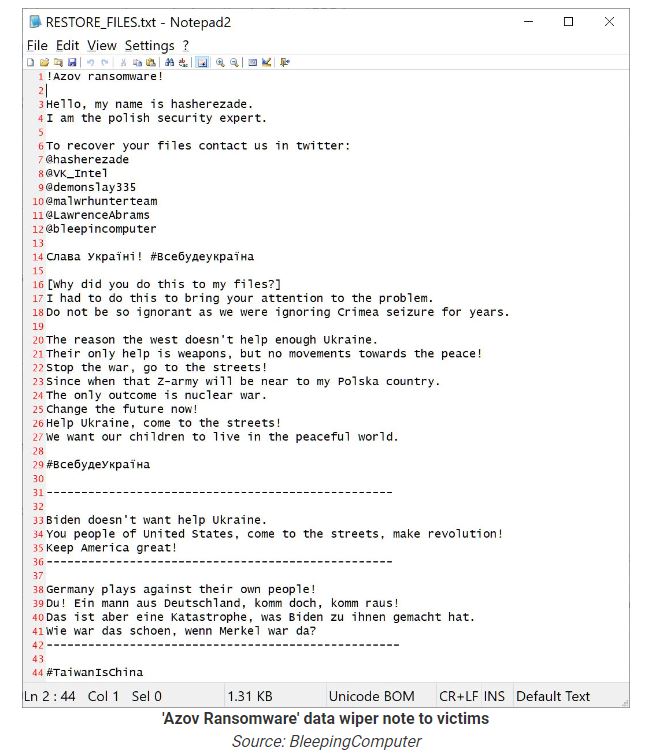
Now comes an attack that attempts to blame/frame security researchers and a computer website for a new destructive program.  Called Azov, it masquerades as RansomWare, when in fact its sole purpose is to totally encrypt hard drives with no way to decrypt.

It leaves a ransom note that reads:


When the victim reads this ransom note, they see a list of potential criminal partners near the top.  All of those listed have denied an knowledge or involvement with this situation.  Also, if you read the entire note it seems to be pointing to a pro-Russia approach to the invasion of Ukraine.

If possible, do not allow Azov onto your systems and if you are one of the unfortunate individuals affected by this, hopefully you have reliable backups as there is NO decryption key.

For the full story, you can follow this link to bleepingcomputer.com.  

Thursday, October 27, 2022

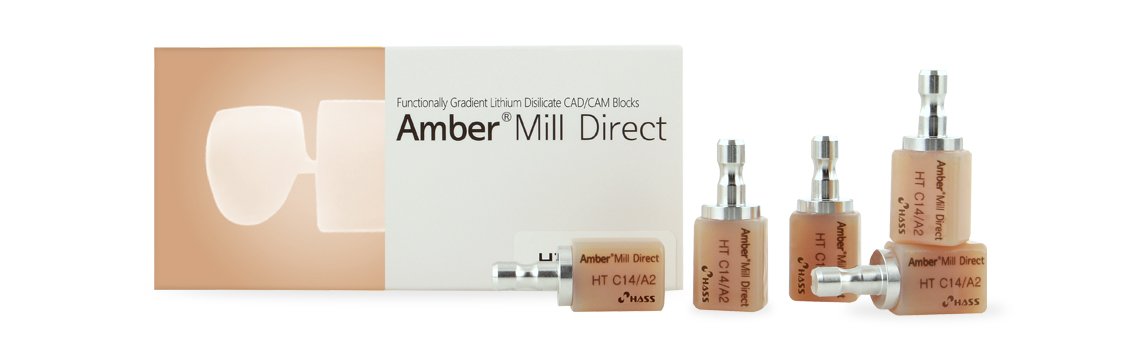
Amber Mill DIRECT and Perfit FS Now Undergoing Testing in our Office


For those of you who either have a mill in your office or are considering getting one (and if you aren't, NOW is the time to be looking into it), I have some interesting news.

For a lot of offices, they don't want to necessarily transfer ALL of their lab functions in-house.  What many offices are looking for is materials that can be polished to a finish instead of needing to stain and glaze using an oven.

However, along with that aspect, there is also the aspect of wanting certain materials that *require* firing in an oven.  Many offices would love to have the aesthetics of lithium disilicate or the strength of zirconia.  However, as we know lithium disilicate in its original state is lavender in color until it is fired.  Then there is zirconia which needs to be fired to shrink to the exact size needed to fit the prep.  If zirconia is *not* fired, the material will not fit.

Well, now those two concerns are no longer valid.  Amber Mill DIRECT is a lithium disilicate that is the correct shade when milled and can be polished to a high level.  Next up is Perfit FS which is a zirconia sintered block that does not require an over either.

Basically this means that offices wanting to do in-office milling can do so while getting the matterials they want with the convenience they need.

I've been fortunate enough to receive some samples of both materials and I will be milling some cases with them in the not too distant future.  Once we get some cases under our collective belts, I'll be posting more about how they perform.  I got a chance to see some of these milled restorations at the recently held SmileCon in Houston and in the DGShape booth, they looked amazing.  However, I'm a skeptic by nature and will withhold judgement until I work with the materials myself.

In the meantime though, here is a photo of a Perfit FS that I saw in Houston.  I'll be reporting back when I have more to say on these materials...


Wednesday, October 26, 2022

Cutting the Cord... and Costs With a New Approach to Gingival Retraction


Here's a little something I put together after experimenting with VOCO's Retraction Paste.  As most of you know I'm always looking for ways to increase efficiency.  No one wants a dental procedure to take longer.  So when i see an opportunity to increase my efficiency, I explore it.  I've found one of those great little ways to increase efficiency is with this product.  Read on for my thoughts...


Fixed prosthetics are an intrinsic part of any dental practice. While the market for dental implants continues to grow, the majority of crowns are placed on natural teeth. This means that clear and easily recognizable margins are necessary and will continue to be necessary as the market for naturally supported dental fixed prosthetics continues to grow. As life expectancies continue to increase, an aging population will seek to maintain their quality of life and the number of fixed prosthetic procedures will increase along with those life expectancies.

There has also been growth in the last decade in the purchase and implementation of digital impression systems. These systems continue to experience market penetration growth with estimates being that around 20% or more of practices have expanded into this aspect.

However, whether performed by analog or digital means, the importance of good clinical technique is imperative for clinical success in fixed prosthodontics. This is especially true when consideration is made for the proper capture of the preparation margin. While many aspects of the preparation are intrinsic to long-term clinical success, perhaps nothing is more important than properly capturing the margin.

Tradition

Traditionally the most common way to expose the margin for an impression has been the use of retraction cord. Even though the profession has evolved and improved, retraction cord has continued to be taught in dental schools and used in the majority of clinical cases, even though other choices exist.

Retraction cord is time consuming. A proper length of cord must be dispensed and then placed into the gingival sulcus to allow the tissues to expand and relax in a more open orientation. The actual physical process of placing retraction cord is time consuming and incredibly technique-sensitive. Apply too little pressure in the placement and the cord comes free without providing adequate retraction. Apply too much pressure and the connective tissues of the sulcus can be damaged and pushed away from the tooth, paving the way for gingival recession or iatrogenic infection. There are even instances of impression material being expressed subgingivally, creating foreign body infections from a hardened piece of material left under the tissues that were separated by over-aggressive retraction cord placement.

In some instances, a two-cord technique is used that basically doubles the amount of time to place, while also increasing the chances for cord displacement or iatrogenic injury.

There is also the concern of being able to visually identify the cord in the sulcus. Stories abound in the profession of patients presenting with a localized infection of a single tooth recently prepared for a crown and the doctor finding a strand of retraction cord still wedged snugly into the gingival sulcus with a resulting foreign body reaction in full bloom around it. Someone simply missed the tiny piece of cord.

Placing cord is a very specific and intense skill, demanding exceptional dexterity. It is a difficult skill to teach, and many doctors prefer to place cord themselves as opposed to delegating the placement to an auxiliary. However, this ties the doctor to the procedure and does not allow for other processes (such as hygiene checks) to be completed, therefore slowing the entire office workflow.

There is also the consideration of effectiveness of cord in all cases. In patients with high salivary flow, the cord can be washed out of the sulcus and require the procedure to be repeated thus slowing the workflow even more.

Considering Costs

Not only are assurances of long-term success a motivator, cost savings can be as well. Often doctors consider the “hard costs” of impressions when attempting to analyze office costs without taking into consideration the “soft costs” of time, frustration and lack of optimized workflow.

Survey data from the American Dental Association tells us that the average dental practice prepares about 360 crowns per year, which translates to 30 crowns per month. Factor into the equation that dental office overhead is roughly $5.00 per minute and it is easy to see that “soft costs” of time and optimized workflow mentioned above come into play in a very real way. If 5 minutes is spent in properly placing a single piece of retraction cord, that translates to around $25 just to cover the cost of placing the cord.

Improving Efficiencies and Workflow

One of the things successful doctors embrace is the concept of “just because we’ve always done it that way doesn’t mean we have to always do it that way”. There is no better example of this than achieving successful retraction in fixed prosthetics.

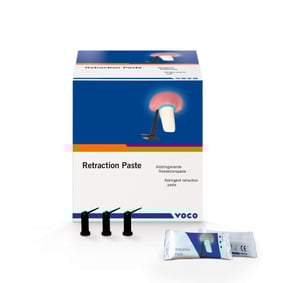
VOCO has developed a Retraction Paste that offers several advantages over the traditional placement of retraction cord.

First of all, the material is a paste, which means that expressing it into the sulcus is significantly less traumatic than pushing cord into place with a stainless steel instrument. The paste is provided in small capsules that hold 0.3 g of material, which is enough for approximately 3 single units. It is expressed from the cartridge via a traditional composite dispenser gun.

The compule has an extra-long tip with a very small diameter that allows the operator to place the tip into the sulcus and express the paste gently so that it provides consistent and atraumatic placement of the material. The lumen of the tip is carefully formed out of plastic with rounded edges so that it can be placed into the sulcus without the risk of traumatic injury to the soft tissue.

The paste contains aluminum chloride, which chemically dries the sulcus of blood, saliva, and crevicular fluid while also widening the sulcus. It has a two-phase consistency for ease of use. When first expressed from the cartridge, the paste is of low viscosity. This allows the material to be gently expressed and delivered precisely into the sulcus. Once placed, it changes to a higher viscosity and expands slightly to allow for adequate displacement and expansion of the tissues.

Once the paste is expressed into the sulcus, it remains there for 1-2 minutes and is then rinsed away with water. The material is easily removed by air/water spray and its unique bright turquoise color helps to assure the operator that all remnants have been removed prior to impressing.

Better Direct Restorations

Often in Class V restorations, there is either the need for retraction or drying. Many operators will notice that around 12 months post op, many buccal Class V restorations begin to develop a dark line around the gingival margin. This line is caused by less than ideal bond strengths in this area that allow for bacteria to begin to grow under the restoration. The most common cause of these “black lines” is contamination of the gingival margin with crevicular fluid.

This fluid is hard to stop mechanically as it tends to seep continuously despite the operator’s best efforts at control. Placing retraction paste is a great advantage in placing these restorations. The aluminum chloride in the paste is a tremendous drying agent and placing it prior to beginning the bonding process greatly helps in preventing contamination of the field.

It is also tremendously helpful for retraction during the restorative process. Doctors who use cord in these procedures are often faced with a dichotomy: Do you pull the cord prior to restoring or after? Sometimes the cord can aid in retraction by leaving it in place, however, there is also the risk of the cord becoming entangled in the restorative material which can lead to myriad problems. Using paste instead of traditional cord greatly simplifies this restorative process.

Summary

While retraction cord has served the profession well, it is imperative that doctors continue to explore procedural options that can help lead to better clinical outcomes.

VOCO’s retraction paste is one of those options. Whether the objective is analog or digital impressions or improving outcomes in indirect restorations. A paste that is easily dispensed, works quickly and predictably, and is removed easily offers the doctor options that are not routinely available with retraction cord.

Retraction paste can improve clinical workflows as well as providing for better and more predictable patient outcomes.